The Dynamic Duo: Why Science Suggests Coffee and Mushrooms Are a Perfect Pairing

Updated: Jul 4

For centuries, both coffee and certain mushrooms have held esteemed places in human cultures – coffee as a beloved energizer and social ritual, and various mushrooms as pillars of traditional medicine. While their combination in a single cup might seem like a modern wellness trend, a deeper look reveals a fascinating interplay of history, chemistry, and potential biological synergy that suggests these two seemingly disparate ingredients truly belong together.
Beyond the simple act of brewing, the magic lies in the complex array of bioactive compounds found in both coffee beans and functional mushrooms. Coffee, a powerhouse of antioxidants and the well-known stimulant caffeine, offers a familiar kick-start. But for some, this can come with jitters or an unwelcome crash. Enter the world of functional mushrooms.
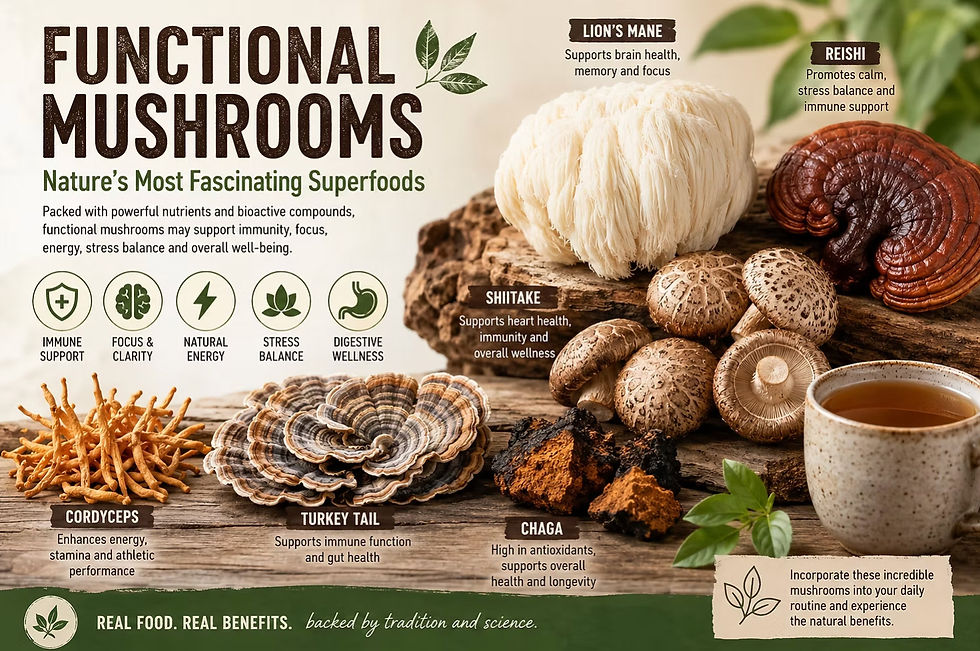
Mushrooms like Lion's Mane, Cordyceps, Reishi, Chaga, and Turkey Tail have been utilized for millennia, particularly in Eastern traditions, for their potential health-supporting properties. Modern science is beginning to unpack these ancient uses, identifying compounds like polysaccharides (including beta-glucans), triterpenes, and antioxidants that interact with the body in intriguing ways.
So, how do these two powerhouses potentially complement each other?
Buffering the Buzz: Adaptogens Meet Caffeine
Many of the mushrooms finding their way into coffee blends are classified as adaptogens. This isn't just a buzzword; adaptogens are natural substances believed to help the body adapt to stress and maintain a state of balance (homeostasis). While caffeine stimulates the central nervous system, adaptogenic mushrooms like Reishi are thought to help modulate the body's stress response, potentially smoothing out the peak and trough often associated with caffeine consumption. This could translate to a more sustained, less anxious energy.
Beyond Energy: A Symphony of Potential Benefits
The partnership extends beyond simply managing caffeine's effects. Specific mushrooms bring their own potential advantages to the blend:
Lion's Mane (Hericium erinaceus): Often dubbed the "smart mushroom," Lion's Mane is being studied for its potential neurotrophic properties. Research, including some promising preclinical and limited human studies, suggests it may support cognitive function, focus, and memory by potentially stimulating nerve growth factor (NGF) synthesis. Combining this with coffee's known ability to enhance alertness creates an appealing mental clarity boost.
Cordyceps (Cordyceps militaris): Historically used to combat fatigue, Cordyceps is gaining attention for its potential to support energy levels and athletic performance. Studies suggest it may improve oxygen utilization and boost ATP production, the body's energy currency. Paired with coffee, this could offer a more robust and enduring sense of vitality.
Reishi (Ganoderma lucidum): Known in traditional medicine as the "mushroom of immortality," Reishi is a renowned adaptogen. Its compounds are being researched for their potential to support the immune system and promote relaxation, helping to counter the wired feeling caffeine can sometimes induce.
Chaga (Inonotus obliquus): This fungus, often found on birch trees, is an antioxidant powerhouse. Rich in compounds that combat oxidative stress, Chaga has a history of use as a general wellness tonic and, interestingly, was used as a coffee substitute in Finland during World War II shortages.
Turkey Tail (Trametes versicolor): Recognized for its impressive beta-glucan content, Turkey Tail is a subject of research for its potential to support immune health and contribute to a healthy gut microbiome, adding another layer of well-being to your morning ritual.
A Historical Connection
While mushroom coffee might seem like a recent invention, the historical threads connecting humans and beneficial fungi run deep. The use of medicinal mushrooms brewed into teas and decoctions is a practice with roots stretching back thousands of years in various cultures. The resourcefulness seen in using Chaga as a coffee alternative in times of scarcity further underscores the long-standing relationship between humans and these fascinating organisms as sources of both comfort and functional benefit.
The Science is Brewing
It's important to note that while the individual components – coffee and these functional mushrooms – have been subjects of scientific inquiry, research specifically on the combined effects of mushroom coffee is still an emerging field. Promising preclinical studies and some human trials lay the groundwork, but more large-scale,Véritable clinical trials are needed to fully understand the extent and mechanisms of the potential benefits of the brewed combination.
Nevertheless, the rationale behind pairing coffee with functional mushrooms is compelling. By potentially balancing caffeine's stimulating effects with the adaptogenic and health-supporting properties of mushrooms, the resulting beverage offers an intriguing proposition: a familiar ritual elevated by the wisdom of ancient traditions and the promise of modern scientific discovery. It seems, based on both history and a growing body of evidence, that coffee and functional mushrooms might just be a blend whose time has truly arrived.

Comments